AI and Mental Health: How Artificial Intelligence Is Reshaping Therapy, Diagnosis, and Psychological Well-Being
Artificial intelligence is transforming mental health care at unprecedented speed — from AI-powered therapy chatbots to diagnostic algorithms. But the technology brings serious ethical concerns alongside its promise.
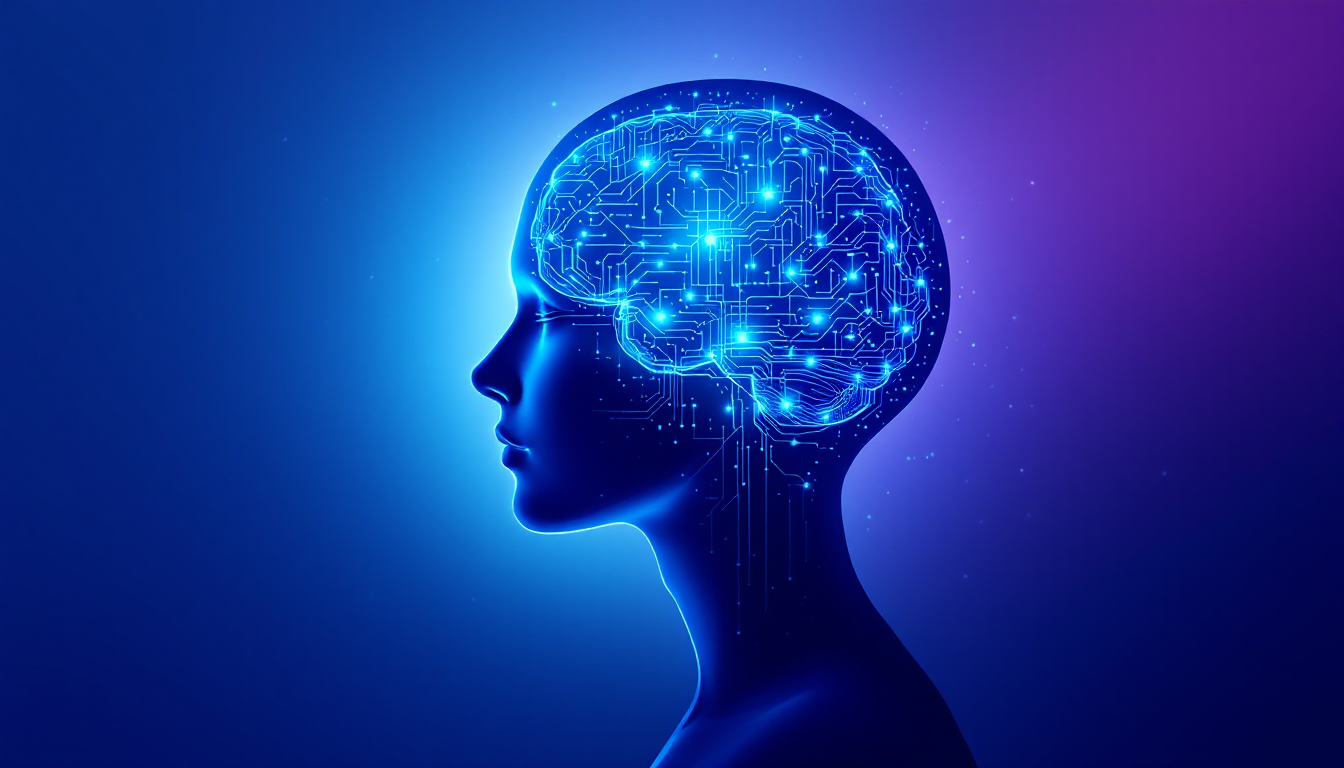
Artificial intelligence is rapidly entering one of the most sensitive domains of human experience: mental health. AI-powered therapy chatbots now have millions of users. Machine learning algorithms screen social media posts for suicide risk. Diagnostic tools analyze speech patterns to detect depression. Meanwhile, the very AI systems that power social media recommendation engines are increasingly implicated in a youth mental health crisis that the U.S. Surgeon General has called an emergency [1]. The question is no longer whether AI will transform mental health care — it already is. The question is whether it will do more good than harm.
The Rise of AI Therapy: Chatbots in the Counseling Chair
The global shortage of mental health professionals is staggering. The World Health Organization estimates a worldwide deficit of over 4 million mental health workers, with low-income countries having fewer than 2 psychiatrists per million people [2]. In the United States, over 150 million people live in federally designated mental health professional shortage areas. Wait times for a first therapy appointment can stretch to months.
Into this gap have stepped AI-powered mental health tools. Apps like Woebot, Wysa, and Youper use natural language processing and principles of cognitive behavioral therapy (CBT) to provide conversational support 24/7. These tools are accessible, affordable (often free), and available without a waitlist. Woebot alone reported over 1.5 million users by 2023.
Early clinical evidence shows modest benefits. A randomized controlled trial published in the Journal of Medical Internet Research found that college students using Woebot for two weeks showed significant reductions in depression and anxiety symptoms compared to a control group [3]. Another study in JMIR Mental Health found that Wysa users reported meaningful improvements in depression scores after 8 weeks of use.
The Limitations: What AI Cannot Do
However, there are fundamental limitations that no amount of algorithmic sophistication can currently overcome:
- No genuine empathy — AI can mimic empathetic responses, but it does not understand suffering. The therapeutic alliance — the trust-based relationship between therapist and client — is consistently identified as one of the strongest predictors of treatment outcomes. AI cannot form this bond.
- Clinical blindness — AI chatbots cannot detect the subtle non-verbal cues that trained therapists rely on: body language, tone fluctuations, hesitation patterns, and the thousand micro-signals that inform clinical judgment.
- Risk management failures — When a human is in acute crisis — suicidal ideation, psychotic episodes, domestic violence situations — the stakes of an incorrect AI response become life-threatening. Reports have documented instances of AI chatbots providing inappropriate or even dangerous advice to users expressing suicidal thoughts.
- Oversimplification — Most AI therapy tools are built on CBT frameworks, which work well for mild-to-moderate anxiety and depression but are inadequate for complex conditions like PTSD, personality disorders, bipolar disorder, or psychosis.
AI in Diagnosis: Promise and Peril
Machine learning algorithms are being developed to detect mental health conditions from digital biomarkers — patterns in speech, text, facial expressions, smartphone usage, and social media activity.
Research published in Nature Medicine demonstrated that natural language processing models can analyze speech patterns to detect depression with approximately 80% accuracy, based on features like speech rate, pause duration, vocal pitch variability, and word choice [4]. Other studies have shown that smartphone sensor data — including movement patterns, sleep timing, and social interaction frequency — can predict depressive episodes days before patients report symptoms.
These tools could theoretically enable earlier intervention, population-level screening, and objective tracking of treatment response. In psychiatry, where diagnosis currently relies almost entirely on subjective patient report and clinician judgment, objective biomarkers would represent a paradigm shift.
The Bias Problem
But AI diagnostic tools carry serious risks. Machine learning models are only as unbiased as their training data, and mental health data is riddled with biases. Historically, mental health research has disproportionately studied white, Western, middle-class populations. AI models trained on this data may systematically misdiagnose or underdiagnose conditions in people of color, non-English speakers, or individuals from different cultural backgrounds.
A 2022 study in The Lancet Digital Health found that commercially available sentiment analysis tools — similar to those used in mental health screening — showed significant accuracy disparities across racial and ethnic groups, with error rates up to 20% higher for African American English compared to standard American English [5].
Social Media Algorithms and the Youth Mental Health Crisis
Perhaps the most consequential intersection of AI and mental health is not therapeutic — it is the AI-driven recommendation algorithms that shape what billions of people see online every day.
Platforms like TikTok, Instagram, YouTube, and Facebook use sophisticated machine learning to predict and serve content that maximizes user engagement. These algorithms have learned that emotionally provocative content — outrage, anxiety, social comparison, and sensationalism — drives more clicks, views, and time-on-platform than neutral content.
The consequences for young people have been devastating. The U.S. Surgeon General's 2023 Advisory on Social Media and Youth Mental Health documented alarming trends: adolescents who spend more than 3 hours daily on social media face double the risk of depression and anxiety symptoms [1]. Internal documents from Meta, leaked by whistleblower Frances Haugen in 2021, revealed that the company's own research showed Instagram made body image issues worse for one in three teenage girls.
The Algorithmic Rabbit Hole
Particularly concerning is the tendency of recommendation algorithms to create "rabbit holes" — progressive pathways into increasingly extreme or harmful content. A teenager who watches one video about dieting may be served increasingly extreme content about calorie restriction, fasting, and eventually pro-anorexia material. A person who searches for information about sadness may find their feed gradually saturated with content about hopelessness and self-harm.
Research from the Center for Countering Digital Hate (2022) demonstrated this experimentally: new TikTok accounts created for fictional 13-year-olds were served self-harm and eating disorder content within minutes of expressing interest in body image or mental health topics. The algorithm did not gatekeep — it amplified.
The Promise: Where AI Could Genuinely Help
Despite these concerns, AI has genuine potential to improve mental health outcomes when deployed responsibly:
- Bridging the access gap — For the billions of people worldwide without access to mental health professionals, AI tools can provide basic psychoeducation and coping strategies that are meaningfully better than nothing.
- Early warning systems — AI monitoring of electronic health records can flag patients at risk for suicide or psychiatric deterioration, enabling proactive outreach. Several health systems have implemented such tools with promising early results.
- Personalized treatment matching — Machine learning models may eventually predict which patients will respond best to which treatments (therapy type, medication, or combination), reducing the current trial-and-error approach.
- Reducing stigma — Some patients — particularly men, adolescents, and members of cultures where mental illness is highly stigmatized — may find it easier to initially engage with an AI tool than a human therapist.
- Continuous monitoring — AI can track mood, behavior, and symptom patterns between appointments, providing clinicians with richer data than periodic self-reports.
Ethical Guardrails: What's Needed
The rapid deployment of AI in mental health demands robust ethical frameworks that currently do not exist:
- Transparency — Users must know when they are interacting with AI rather than a human, and understand the limitations of AI mental health tools.
- Privacy protection — Mental health data is among the most sensitive personal information that exists. Strict data protection standards, with explicit consent requirements, must govern all AI mental health applications. A 2023 Mozilla Foundation investigation found that 28 of 32 popular mental health apps failed basic privacy standards [6].
- Clinical validation — AI mental health tools should be required to demonstrate safety and efficacy through rigorous clinical trials before being marketed to the public, just as medications and medical devices are.
- Algorithmic accountability — Social media platforms must be held responsible for the mental health impacts of their recommendation algorithms, particularly on minors. Legislative efforts like the proposed Kids Online Safety Act in the United States represent steps in this direction.
- Human oversight — AI should augment, not replace, human clinical judgment. Diagnostic AI should function as a decision-support tool for clinicians, not as an autonomous diagnostician.
What You Can Do
If you or someone you care about uses AI mental health tools or is affected by social media's impact on well-being, consider these practical steps:
- Use AI tools as supplements, not substitutes — Chatbot therapy apps can complement professional care but should not replace it for moderate-to-severe conditions.
- Audit your algorithm — Periodically review what content social media algorithms are serving you. If your feed is dominated by negative, anxiety-provoking, or comparison-inducing content, actively retrain the algorithm by unfollowing, muting, or reporting such content.
- Set boundaries for minors — Limit adolescents' social media use, delay smartphone access, and have open conversations about how algorithms work and why platforms want to capture their attention.
- Read privacy policies — Before sharing sensitive information with any mental health app, understand how your data will be stored, used, and shared.
- Seek professional help when needed — If you are experiencing significant mental health symptoms, contact a licensed mental health professional. AI is not equipped to manage crises.
The Road Ahead
AI in mental health is not inherently good or bad — it is a powerful tool whose impact depends entirely on how it is developed, regulated, and deployed. The technology could meaningfully expand access to mental health support for millions of underserved people. It could also deepen the mental health crisis if deployed irresponsibly, without clinical validation, without privacy protections, and without accountability for algorithmic harm.
The mental health of individuals and societies is too important to leave to the unregulated market dynamics that have driven social media's worst outcomes. As AI's role in mental health grows, so must our commitment to ensuring it serves human well-being — not corporate engagement metrics.
References
- U.S. Surgeon General. "Social Media and Youth Mental Health: The U.S. Surgeon General's Advisory." Office of the Surgeon General, 2023.
- World Health Organization. "Mental Health Atlas 2020." WHO, Geneva, 2021.
- Fitzpatrick KK, Darcy A, Vierhile M. "Delivering Cognitive Behavior Therapy to Young Adults With Symptoms of Depression via a Fully Automated Conversational Agent (Woebot): A Randomized Controlled Trial." JMIR Mental Health. 2017;4(2):e19.
- Cummins N, et al. "A review of depression and suicide risk assessment using speech analysis." Speech Communication. 2015;71:10-49.
- Blodgett SL, et al. "Language (Technology) is Power: A Critical Survey of Bias in NLP." Proceedings of the 58th Annual Meeting of the Association for Computational Linguistics. 2020:5454-5476.
- Mozilla Foundation. "*Privacy Not Included: Mental Health Apps." Mozilla Foundation, 2023.
This article is for educational purposes and does not constitute medical advice. If you are experiencing a mental health emergency, contact the 988 Suicide and Crisis Lifeline by calling or texting 988, or call 911.
Frequently Asked Questions
Can an AI chatbot replace a real therapist?▼
Is social media AI contributing to the teen mental health crisis?▼
Can AI accurately diagnose mental health conditions?▼
What are the privacy risks of mental health AI apps?▼
Medical Disclaimer: This article is for educational purposes only and does not constitute medical advice. Always consult your healthcare provider before making health decisions.