Screens Are Reshaping Your Eyes: How iPhones, iPads, and Digital Devices Are Fueling a Global Myopia Epidemic
A surge of scientific evidence now connects prolonged screen time on smartphones, tablets, and computers to rapidly rising rates of myopia (nearsightedness) worldwide — especially among children. Experts warn we are facing a global eye health crisis with serious long-term consequences.
Myopia — commonly known as nearsightedness — is the most prevalent eye disorder on the planet, and it is getting worse at an alarming rate. In the early 1970s, approximately 25% of Americans were nearsighted. Today, that figure exceeds 42%, and among young adults in East Asian urban centers like Seoul, Taipei, and Singapore, myopia prevalence has soared past 80-90% [1]. The World Health Organization projects that by 2050, roughly half the global population — nearly 5 billion people — will be myopic, with close to 1 billion at risk for high myopia and its potentially blinding complications [2]. At the center of this epidemic is a device most of us hold inches from our face for hours every day: the smartphone.
This article examines the scientific evidence connecting screen time — particularly on iPhones, iPads, and similar devices — to the global myopia crisis. We will explore the biological mechanisms, review the landmark studies, assess the particular risks to children, and provide evidence-based strategies for protecting your vision and your family's eye health.
Understanding Myopia: More Than Just Blurry Distance Vision
Myopia occurs when the eyeball grows too long from front to back, or less commonly, when the cornea or lens is too curved. This causes light entering the eye to focus in front of the retina rather than directly on it, making distant objects appear blurry while near objects remain clear.
What most people do not realize is that myopia is a structural disease of the eye, not merely an optical inconvenience. As the eyeball elongates, the retina — the delicate light-sensing tissue at the back of the eye — is stretched thinner, like a balloon being inflated beyond its intended size. This stretching makes the retina progressively more vulnerable to tears, detachments, and degeneration.
The Severity Spectrum
Ophthalmologists classify myopia by the degree of refractive error, measured in diopters (D):
- Mild myopia: up to -3.00 D — correctable with thin glasses or contacts, relatively low complication risk
- Moderate myopia: -3.00 to -6.00 D — noticeable dependence on correction, increased complication risk
- High myopia: beyond -6.00 D — significantly elevated risk of retinal detachment, myopic macular degeneration, glaucoma, and cataracts
- Pathological myopia: extreme elongation with active retinal degeneration — a leading cause of irreversible blindness, particularly in East Asia
A critical finding from epidemiological research is that complication risk does not increase linearly — it rises exponentially with each additional diopter of myopia. A person with -8.00 D has a roughly 40 times greater risk of myopic macular degeneration than someone with -1.00 D [3]. This is why preventing the progression of myopia in children is so important: every diopter avoided today reduces the lifetime risk of serious eye disease tomorrow.
The Screen Time Explosion: A Timeline of Change
To understand the myopia epidemic, we need to appreciate just how dramatically screen habits have changed in a remarkably short period.
The original iPhone launched in 2007. The iPad followed in 2010. In less than two decades, smartphones have gone from novelty to necessity. Today, the average American adult spends over 7 hours per day looking at screens, according to data from eMarketer and DataReportal [4]. For teenagers, that figure can exceed 8-9 hours when combining school-related screen use with recreational use.
But total screen time only tells part of the story. What matters for myopia is the distance at which screens are viewed and the duration of sustained near focus:
- Desktop computers are typically viewed at 50-70 cm (20-28 inches)
- Laptops at 40-50 cm (16-20 inches)
- Tablets (iPads) at 30-40 cm (12-16 inches)
- Smartphones (iPhones) at 20-30 cm (8-12 inches) — and often much closer
Smartphones demand the closest viewing distance and the most intense accommodative (focusing) effort from the eyes. A 2021 study published in JAMA Ophthalmology using objective eye-tracking measurements found that children using smartphones held them an average of just 21.8 cm from their eyes — significantly closer than books (30.4 cm) or tablets (29.2 cm) [5]. This extreme near-work distance places maximum strain on the eye's focusing system and sends the strongest biological signals for the eye to elongate.
The Science: How Screens Drive Myopia
The connection between near work and myopia has been studied for over a century, but the introduction of digital devices has accelerated both the research and the problem. Multiple biological mechanisms link screen-based near work to eye elongation.
Mechanism 1: Accommodative Lag and Hyperopic Defocus
When you focus on a nearby screen, the ciliary muscle inside the eye contracts to change the shape of the lens — a process called accommodation. During prolonged near work, the accommodative system often "underperforms," focusing slightly behind the screen rather than precisely on it. This creates a condition called hyperopic defocus at the retinal periphery — a blur signal that the eye interprets as an instruction to grow longer [6].
Animal studies have conclusively demonstrated that hyperopic defocus is a powerful trigger for axial eye growth. When researchers placed lenses on young chicks, monkeys, and other animals that induced hyperopic defocus, the eyes elongated rapidly and reliably. When the defocus was removed, growth slowed. This mechanism is now considered one of the primary drivers of myopia progression in humans.
Smartphones make this particularly problematic because their small screens and close viewing distances demand intense, sustained accommodation. The accommodative system fatigues more quickly at closer distances, increasing the frequency and magnitude of lag.
Mechanism 2: Peripheral Defocus Patterns
Modern screens create a flat, two-dimensional image that the eye processes differently from three-dimensional natural environments. Research by Smith et al. at the University of Houston demonstrated that the peripheral retina — not just the central fovea — plays a critical role in regulating eye growth [7]. When the peripheral retina receives hyperopic (behind-the-retina) blur signals, as commonly occurs during prolonged screen viewing, it stimulates scleral remodeling and axial elongation.
Natural outdoor environments, by contrast, provide a much more varied mix of focal distances with relatively less peripheral hyperopic defocus — one reason why outdoor time is protective against myopia.
Mechanism 3: Reduced Dopamine Release
One of the most important discoveries in myopia research over the past two decades is the role of retinal dopamine. Bright outdoor light — typically 10,000 to 100,000 lux — stimulates the release of dopamine by retinal amacrine cells. Dopamine acts as a "stop" signal for eye growth, inhibiting the scleral remodeling that drives axial elongation.
Indoor environments — where screen use predominantly occurs — typically provide only 100 to 500 lux, far below the threshold needed to trigger meaningful dopamine release. Children who spend most of their day indoors on screens are essentially depriving their retinas of the dopamine signal that keeps eye growth in check [8].
This mechanism explains one of the most robust findings in myopia epidemiology: children who spend more time outdoors develop less myopia, even if they do large amounts of near work. The protective effect of outdoor light appears to partially counteract the myopia-promoting effect of screens and study. But when outdoor time is displaced by screen time — as it increasingly is for today's children — both risk factors compound.
Mechanism 4: Disrupted Circadian Signaling
The eye has its own circadian clock that regulates daily fluctuations in axial length, choroidal thickness, and intraocular pressure. Normal diurnal patterns — bright light during the day, darkness at night — keep this clock synchronized and eye growth regulated.
Screen use, particularly in the evening and at night, disrupts these patterns. The artificial light from screens — especially the blue-enriched light from LED-backlit displays — suppresses melatonin production and alters the retinal circadian rhythm. Emerging research from Chakraborty et al. (2022) suggests that this disruption may disinhibit eye growth processes that are normally suppressed during specific phases of the circadian cycle [9].
For children who use phones and tablets in bed before sleep — an increasingly universal behavior — this represents a double insult: intense near-focus stimulus combined with circadian disruption, delivered during a period when the eye should be in its "rest and regulate" phase.
The Evidence: Landmark Studies Linking Screens to Myopia
The scientific literature on screen time and myopia has grown enormously in recent years. Here are some of the most important studies.
The COVID-19 Natural Experiment
The COVID-19 pandemic provided an unprecedented, if unwelcome, natural experiment. Lockdowns worldwide forced children indoors and onto screens for both schooling and entertainment. Multiple studies documented the consequences:
A landmark Chinese study published in JAMA Ophthalmology by Wang et al. (2021) examined refractive data from 123,535 children aged 6 to 13 across multiple years. The study found a significant "myopia shift" in 2020 compared to pre-pandemic years — a 0.3 diopter increase in myopia prevalence among 6-year-olds, equivalent to roughly 3 years of normal myopia progression compressed into a single year of lockdown [10]. The effect was most pronounced in the youngest children, whose eyes are most susceptible to environmental influences.
A systematic review and meta-analysis by Hu et al. (2023) in the British Journal of Ophthalmology pooled data from 22 studies involving over 600,000 children and found that the COVID-19 pandemic was associated with a 26% increase in myopia incidence in children, directly correlated with increased screen time and decreased outdoor activity during lockdown periods [11].
The Sydney Myopia Study and Outdoor Time
The Sydney Myopia Study, led by Kathryn Rose and colleagues at the University of Sydney, followed over 4,000 children for years and produced some of the most influential findings in the field. The study demonstrated that children who spent less than 90 minutes per day outdoors were significantly more likely to become myopic than those who spent more time outside — and this effect was independent of the amount of near work they did [12].
Critically, the study also found that the total amount of near work — which now overwhelmingly includes screen time — was an independent risk factor for myopia, even when outdoor time was adequate. Children with both high screen time and low outdoor time were at the greatest risk.
The Guangzhou Randomized Trial
In one of the most rigorous interventional studies ever conducted on myopia prevention, He et al. (2015) published results in JAMA from a randomized controlled trial involving 1,903 first-grade children in Guangzhou, China. Schools randomized to add 40 minutes of mandatory outdoor time per day showed a 23% reduction in new myopia cases over three years compared to control schools [13]. This study provided some of the strongest causal evidence that increasing outdoor time — and by implication, reducing indoor screen time — can prevent myopia onset.
The Digital Device Distance Study
Bhandari and Ostrin (2022) published a study in Ophthalmic and Physiological Optics that used wearable sensors to objectively measure viewing distances and light exposure in children throughout the day. They found that children who spent more time on smartphones (as opposed to larger screens) had significantly closer average working distances and received less ambient light — both independent risk factors for myopia progression [14]. The study quantified what parents intuitively notice: kids bury their faces in their phones in ways they never did with books or larger screens.
Meta-Analysis: Screen Time as Independent Risk Factor
A comprehensive meta-analysis by Lanca and Saw (2020) published in The Lancet Digital Health examined 3,325 studies and included 26 that met rigorous inclusion criteria. The analysis found that each additional hour per day of screen time was associated with a 2-3% increased odds of myopia in children. Smartphone and tablet use showed stronger associations than computer or television viewing, consistent with the closer viewing distances these devices demand [15].
Children at Greatest Risk: A Developing Eye in a Digital World
While myopia can progress at any age, children and adolescents face the greatest risk from screen-induced myopia for several biological reasons.
The Window of Vulnerability
The human eye undergoes rapid growth during infancy and early childhood, then continues more gradual refractive development through the teenage years. This process — called emmetropization — is guided by visual feedback from the environment. The eye literally uses visual experience to fine-tune its growth to achieve focused vision.
In a natural environment with varied viewing distances and abundant outdoor light, this process typically produces eyes that are close to emmetropic (normal-sighted) by the early school years. But when a child's visual environment is dominated by close screens in dim indoor lighting, the emmetropization process receives distorted signals — predominantly near-focus demand and insufficient bright light — that drive the eye toward excessive elongation.
The younger the child, the more responsive the eye is to these signals. This is why the COVID-19 studies found the largest myopia shifts in the youngest children, and why early childhood screen habits are a particular concern.
The Compounding Effect
Myopia that begins early in childhood tends to progress more aggressively and reach higher final levels than myopia that begins in the teenage years. A child who becomes myopic at age 6 may reach -6.00 or -8.00 D by adulthood — entering the high-myopia range where sight-threatening complications become likely. A child who doesn't become myopic until age 12 might stabilize at -2.00 or -3.00 D — a much safer level.
This means that the screen habits established in early childhood — the age at which iPads are increasingly used as educational tools and entertainment — have consequences that compound over decades. Every year of myopia progression avoided in childhood reduces the lifetime burden of the disease.
Current Screen Use Patterns Among Children
Data from Common Sense Media's 2023 survey paints a sobering picture:
- Children ages 0-2 average 49 minutes of daily screen time
- Children ages 2-4 average 2 hours and 39 minutes
- Children ages 5-8 average 3 hours and 25 minutes
- Tweens (8-12) average 5 hours and 33 minutes
- Teens (13-18) average 8 hours and 39 minutes
These figures represent increases of 50-100% compared to pre-pandemic levels and show no signs of declining. For many children, screens are now the dominant visual experience of their waking lives — a radical departure from the visual environment in which the human eye evolved.
The Global Picture: A Myopia Pandemic
The myopia epidemic is truly global, though its severity varies dramatically by region.
East Asia: The Epicenter
Countries with intensive education systems and high technology adoption have been hit hardest. In South Korea, approximately 96% of 19-year-old men are myopic — nearly the entire population. In China, myopia prevalence among university students exceeds 80%. In Singapore and Taiwan, similar figures are reported for young adults. These societies have experienced the perfect storm of extreme academic pressure (intensive near work), early smartphone adoption, and limited outdoor time due to urban density and cultural factors.
The economic cost is staggering. China alone estimates its annual myopia-related economic burden at over $100 billion when accounting for optical correction, medical treatment, productivity losses, and complications management. The Chinese government has declared childhood myopia a national crisis and implemented sweeping measures including limits on children's screen time, mandatory outdoor activity in schools, and restrictions on youth gaming.
North America and Europe: Catching Up
Western nations initially lagged behind East Asia in myopia rates, but the gap is closing rapidly. In the United States, myopia prevalence among young adults has approximately doubled since the 1970s. In parts of Europe, similar trends are documented. The UK's National Health Service has reported year-over-year increases in myopia diagnoses among children, particularly since 2020.
The Economic and Healthcare Burden
The Brien Holden Vision Institute estimates that uncorrected myopia already costs the global economy approximately $244 billion annually in lost productivity — and this figure is projected to rise sharply as prevalence increases [2]. The downstream healthcare costs — treating retinal detachments, managing glaucoma, performing cataract surgery decades earlier than normal, caring for people with myopic macular degeneration — will place enormous strain on ophthalmological services worldwide.
What Blue Light Glasses Won't Tell You
The massive growth in screen time has spawned an equally massive market for "blue light blocking" glasses, screen filters, and "eye protection" modes on devices. These products are marketed with claims of reducing eye strain, preventing eye damage, and protecting vision.
The scientific evidence does not support these claims for myopia prevention.
A rigorous 2023 Cochrane systematic review — the gold standard of evidence-based medicine — examined all available randomized controlled trials on blue light filtering lenses. The review concluded that there is no reliable evidence that blue light filtering lenses reduce eye strain, improve sleep quality, or protect retinal health compared to non-filtering lenses [16].
The fundamental misunderstanding is this: the risk from screens is not about the color of the light — it is about the distance and duration of near focus. Blue light glasses do nothing to change the accommodative demand, the peripheral defocus patterns, the lack of outdoor light, or the circadian disruption caused by prolonged device use. They provide a false sense of security while the actual risk factors go unaddressed.
Night mode and "warm" screen settings (like Night Shift on iPhones) may have modest benefits for sleep quality by reducing blue light exposure before bed, but they do not reduce myopia risk.
Evidence-Based Protection: What Actually Works
The good news is that we have effective, evidence-based strategies for reducing screen-related myopia risk. The key is combining multiple approaches.
1. Increase Outdoor Time
This is the single most powerful protective factor against myopia development. Current evidence supports a minimum of 90-120 minutes of outdoor time daily for children. The benefit comes primarily from exposure to bright outdoor light (not from physical activity per se), so even sitting outdoors reading is protective — though active outdoor play is ideal for overall health.
Practical implementation:
- Prioritize outdoor recess and physical education in schools
- Encourage outdoor play before and after school
- Use outdoor spaces for homework and reading when weather permits
- Walk or bike to school rather than driving
- Schedule family outdoor activities on weekends
2. Follow the 20-20-20 Rule
Every 20 minutes of screen or near work, look at an object at least 20 feet (6 meters) away for at least 20 seconds. This allows the ciliary muscle to relax from sustained accommodation. While the evidence for this specific rule is largely based on expert consensus rather than randomized trials, the underlying principle — that breaking up sustained near work reduces accommodative stress — is well supported.
For children, consider setting a timer or using apps that remind them to take breaks. Better yet, structure activities so that screen sessions are naturally limited and interspersed with other activities.
3. Maintain Proper Viewing Distance
The closer the screen, the harder the eyes work and the stronger the myopia-promoting signal. Evidence-based guidelines recommend:
- Smartphones: at least 30-40 cm (12-16 inches) from the eyes — arm's length for children
- Tablets: at least 40 cm (16 inches)
- Laptops and computers: at least 50-60 cm (20-24 inches)
- Use the largest appropriate screen — viewing a larger screen at a greater distance imposes less accommodative demand than a small phone screen held close
For children, consider using iPads or computers rather than smartphones for screen-based activities, and position the device on a table or stand rather than allowing the child to hold it in their lap or in bed.
4. Limit Total Screen Time
Current pediatric guidelines recommend:
- Under 18 months: no screen time except video calling
- 18-24 months: limited, high-quality content with a parent present
- 2-5 years: no more than 1 hour per day
- 6+ years: consistent limits that ensure adequate sleep, physical activity, and outdoor time
For adults, while hard limits are less practical, being conscious of total daily screen time and building in regular breaks and outdoor exposure can meaningfully reduce the myopic stimulus.
5. Optimize the Visual Environment
- Ensure good ambient lighting when using screens — reading in dim light increases accommodative effort and may worsen myopia risk
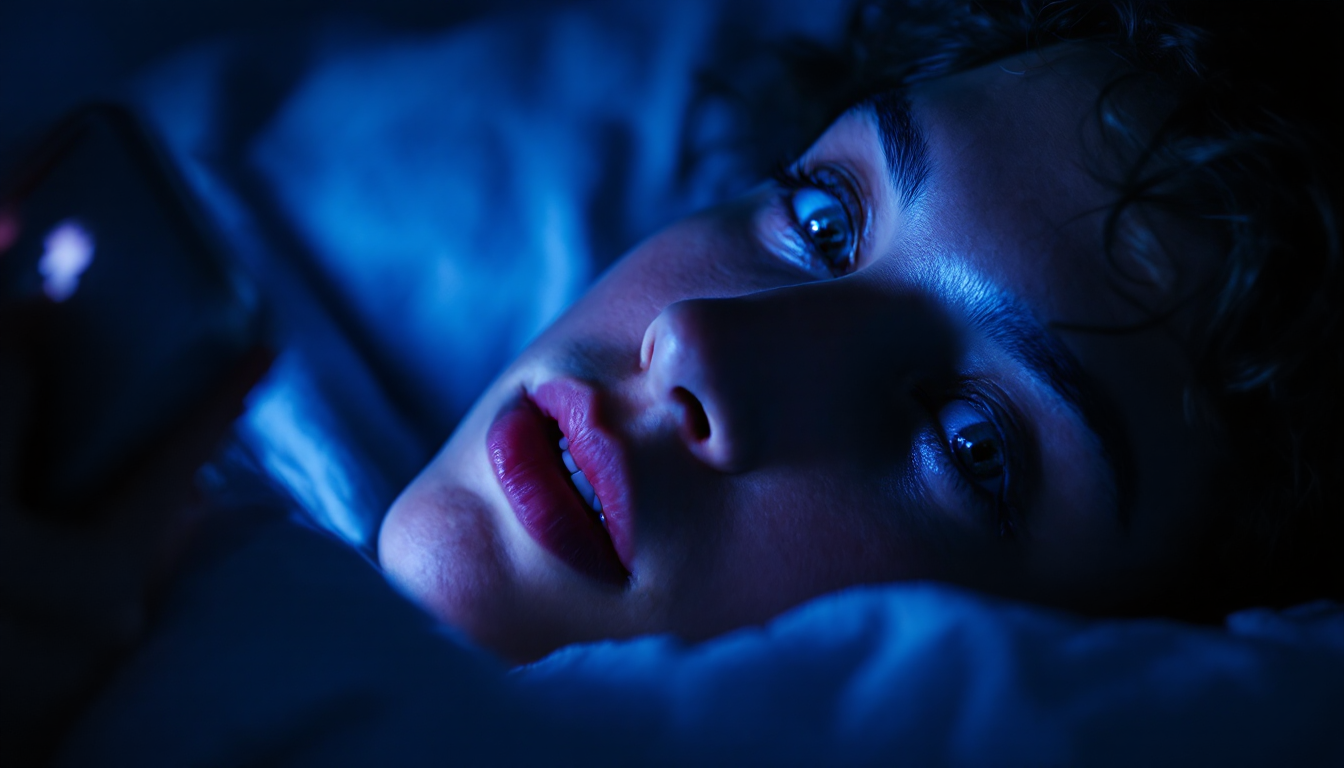
- Avoid screen use in bed in the dark — this combines maximum accommodative demand (close, small screen) with minimum ambient light and circadian disruption
- Position desks near windows to increase ambient light during homework and screen-based learning
- Use matte screen protectors to reduce glare, which can cause squinting and accommodative fluctuation
6. Medical Interventions for Myopia Control
For children already diagnosed with progressive myopia, several medical treatments have been shown in randomized controlled trials to slow progression:
- Low-dose atropine eye drops (0.01-0.05%): reduce myopia progression by approximately 50% with minimal side effects. Widely used in Asia and increasingly adopted in Western practice.
- Orthokeratology (Ortho-K): specially designed rigid contact lenses worn overnight that temporarily reshape the cornea and reduce peripheral hyperopic defocus. Studies show 40-60% reduction in progression.
- Multifocal soft contact lenses: MiSight (CooperVision) is FDA-approved specifically for myopia control in children ages 8-12, with studies showing approximately 59% reduction in myopia progression over 3 years.
- Specially designed spectacle lenses: newer designs like DIMS (Defocus Incorporated Multiple Segments) and H.A.L.T. technology show promising results in slowing progression by 50-60%.
Parents of myopic children should discuss these options with an eye care professional experienced in myopia management. The earlier intervention begins, the greater the cumulative benefit.
What the Tech Industry Should Do
While individual behavior change is important, the scale of the myopia epidemic demands systemic responses — including from the technology companies whose products are contributing to the problem.
- Built-in viewing distance monitoring: smartphones and tablets with front-facing cameras could alert users (especially children) when the device is being held too close to the eyes. Some Android devices have begun implementing this feature.
- Mandatory break reminders: default-on screen break notifications, especially in children's profiles, that follow the 20-20-20 rule.
- Screen time reporting focused on near-work: current screen time tools measure total time but not viewing distance or break frequency — the factors most relevant to eye health.
- Support for research: technology companies should fund independent research on the long-term visual health effects of their products.
- Responsible marketing: companies should not market tablets and smartphones to very young children without including eye health guidance.
A Note on Adults: It's Not Just a Children's Problem
While children face the greatest myopia risk from screens, adults are not immune. Research has documented a phenomenon called "adult-onset myopia" and "late-progression myopia" that can occur in adults who take on intensive near-work occupations or dramatically increase their screen time.
A study of medical residents found that myopia progressed by an average of -0.5 D during the first two years of residency — a period of intensive reading and screen use [17]. Similar progression has been documented among graduate students, programmers, and other heavy screen users in their 20s and 30s.
Adults may also experience pseudomyopia — a temporary increase in nearsightedness caused by ciliary muscle spasm from prolonged near work. While not true structural myopia, pseudomyopia causes real symptoms (blurry distance vision after extended screen use) and may, if sustained, contribute to permanent refractive changes.
The Path Forward: Seeing Clearly in a Screen-Filled World
We are not going to stop using screens. Smartphones, tablets, and computers are integral to modern education, work, communication, and entertainment. The goal is not to demonize technology but to use it wisely — with an understanding of the biological costs of the visual environment we are creating.
The myopia epidemic is perhaps the clearest example of how rapidly changing technology can outpace our biology. The human eye evolved for an outdoor lifestyle with varied focal distances and abundant natural light. We have, within a single generation, replaced that environment with one dominated by close screens in dim rooms. The eye is responding exactly as its biology dictates: by growing longer to optimize for near focus. The consequences — a world in which half the population is nearsighted and hundreds of millions face sight-threatening complications — are the predictable result.
But this trajectory is not inevitable. The research clearly shows that outdoor time protects against myopia. Proper screen habits reduce the myopic stimulus. Medical interventions can slow progression. Policy changes can shift population-level outcomes. What is needed is the same thing that is needed for any public health challenge: awareness, action, and the willingness to prioritize long-term health over short-term convenience.
The next time you hand your child an iPad, or pick up your iPhone to scroll for another hour, remember: your eyes are watching, and they are changing in response to what they see.
References
- Holden BA, Fricke TR, Wilson DA, et al. "Global Prevalence of Myopia and High Myopia and Temporal Trends from 2000 through 2050." Ophthalmology. 2016;123(5):1036-1042. doi:10.1016/j.ophtha.2016.01.006
- Brien Holden Vision Institute. "The Impact of Myopia and High Myopia." World Health Organization report on myopia. 2015.
- Flitcroft DI. "The complex interactions of retinal, optical and environmental factors in myopia aetiology." Progress in Retinal and Eye Research. 2012;31(6):622-660.
- DataReportal. "Digital 2024: Global Overview Report." We Are Social and Meltwater. January 2024.
- Bhandari KR, Ostrin LA. "Objective measures of viewing behaviour in children during near tasks." JAMA Ophthalmology. 2021;139(12):1285-1292.
- Wallman J, Winawer J. "Homeostasis of eye growth and the question of myopia." Neuron. 2004;43(4):447-468.
- Smith EL III, Hung LF, Huang J. "Relative peripheral hyperopic defocus alters central refractive development in infant monkeys." Vision Research. 2009;49(19):2386-2392.
- Feldkaemper M, Schaeffel F. "An updated view on the role of dopamine in myopia." Experimental Eye Research. 2013;114:106-119.
- Chakraborty R, Ostrin LA, Nickla DL, et al. "Circadian rhythms, refractive development, and myopia." Ophthalmic and Physiological Optics. 2018;38(3):217-245.
- Wang J, Li Y, Musch DC, et al. "Progression of Myopia in School-Aged Children After COVID-19 Home Confinement." JAMA Ophthalmology. 2021;139(3):293-300.
- Hu Y, Zhao F, Ding X, et al. "Rates of myopia development in young Chinese schoolchildren during the COVID-19 pandemic." British Journal of Ophthalmology. 2023;107(1):60-64.
- Rose KA, Morgan IG, Ip J, et al. "Outdoor activity reduces the prevalence of myopia in children." Ophthalmology. 2008;115(8):1279-1285.
- He M, Xiang F, Zeng Y, et al. "Effect of Time Spent Outdoors at School on the Development of Myopia Among Children in China: A Randomized Clinical Trial." JAMA. 2015;314(11):1142-1148.
- Bhandari KR, Ostrin LA. "Objective measures of near viewing in children: Viewing distance and near visual behavior during school and after-school activities." Ophthalmic and Physiological Optics. 2022;42(6):1232-1242.
- Lanca C, Saw SM. "The association between digital screen time and myopia: A systematic review." The Lancet Digital Health. 2020;2(12):e658-e668.
- Downie LE, Cain N, Kaye R, et al. "Blue-light filtering spectacle lenses for visual performance, sleep, and macular health in adults." Cochrane Database of Systematic Reviews. 2023;(8):CD013244.
- Lim LT, Gong Y, Ah-Kee EY, et al. "Impact of parental myopia and outdoor activity on myopia in young adults: Prospective cohort data." Investigative Ophthalmology & Visual Science. 2014;55(13):778.
This article is intended for educational purposes and does not constitute medical advice. If you have concerns about myopia or screen-related vision changes, consult a qualified eye care professional — an optometrist or ophthalmologist — for a comprehensive examination and personalized guidance.
Frequently Asked Questions
Can using my iPhone or iPad actually make my eyesight worse?▼
How much screen time is safe for children's eyes?▼
What is the 20-20-20 rule?▼
Why are myopia rates increasing so rapidly worldwide?▼
Is myopia just an inconvenience, or is it actually dangerous?▼
Does outdoor time really help prevent myopia?▼
Are blue light glasses effective at preventing myopia?▼
Can myopia be reversed once it develops?▼
Medical Disclaimer: This article is for educational purposes only and does not constitute medical advice. Always consult your healthcare provider before making health decisions.